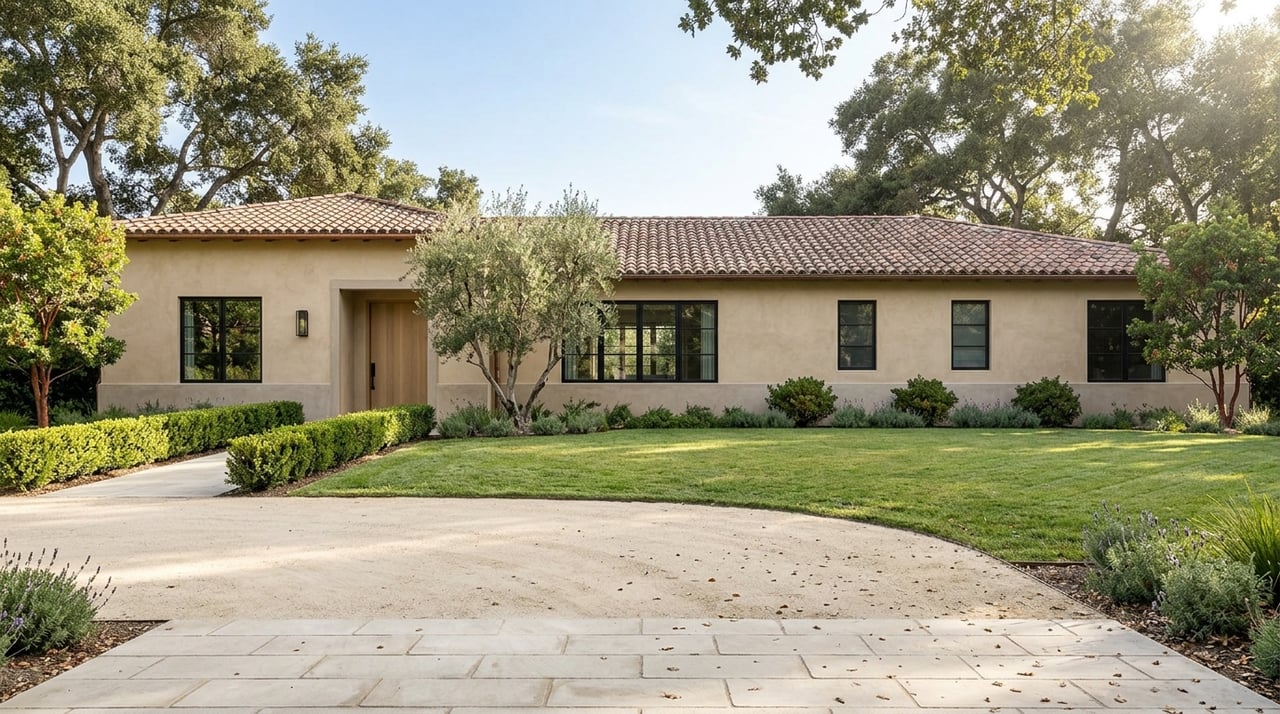
Los Altos Hills vs Palo Alto for Estate Buyers
April 2, 2026
April 2, 2026
Trying to choose between Los Altos Hills and Palo Alto for an estate purchase often comes down to one big question: do you want more land and privacy, or more walkability and daily convenience? If you are buying in the mid-Peninsula at this level, both markets can be compelling, but they offer very different lifestyles. This guide will help you compare lot size, privacy, commute patterns, school-boundary considerations, and pricing so you can narrow in on the right fit for your goals. Let’s dive in.
For many estate buyers, the first major difference is the physical structure of the market.
In Los Altos Hills, zoning requires a minimum parcel size of 43,560 square feet, or 1 acre, along with additional dimensional standards such as a 160-foot inscribed circle and at least one net acre within a 350-foot circle, according to the town’s zoning code. Standard setbacks are also larger, with 40 feet in front and 30 feet on the sides and rear.
That framework shapes a market built for larger homesites and more separation between properties. The town notes that a typical new single-family home averages about 6,700 square feet, and some recent estate homes have ranged from 10,000 to 25,000 square feet. Los Altos Hills is also overwhelmingly detached housing, with 98.2% of the housing stock classified as single-family detached in 2020, according to the Housing Element public review draft.
In Palo Alto, the lot pattern is much more varied and generally smaller. The city’s single-family zoning technical manual lists R-1 subdistricts with typical lots of 4,980, 5,810, 6,640, 8,300, or 16,600 square feet. Standard setbacks are generally 20 feet front and rear, 6 to 8 feet interior side, and 16 feet street side.
For you as a buyer, that usually means Palo Alto can still offer prestigious detached homes, but often on more compact lots with closer spacing between residences. If your idea of an estate includes acreage, broad setbacks, and a more expansive site plan, Los Altos Hills is structurally built for that outcome.
The next decision point is how you want everyday life to feel.
Los Altos Hills is intentionally designed around a rural, residential-agricultural lifestyle. The town states that commercial activity is absent and highlights an approximately 80-mile pathway system that connects much of the community and links residents to surrounding open space through safe, convenient non-vehicular travel, according to Town Facts and the Pathway System overview.
That creates a very specific rhythm of living. You get a more secluded, path-oriented environment where open space, separation, and privacy tend to define the experience more than proximity to retail or transit.
Palo Alto, by contrast, is the more urban and errand-friendly option. The city describes itself as walkable, with a robust bike and pedestrian network, plus access to Caltrain, buses, rideshare, and regional transit connections through the city’s transportation resources. Its Transit Center serves as a regional hub with Caltrain, VTA, SamTrans, Dumbarton Express, and Stanford’s Marguerite shuttle.
If you want to step out for coffee, run errands without a long drive, or rely less on a car, Palo Alto is usually the stronger match. If you want a quieter, more buffered residential setting where land itself is part of the value, Los Altos Hills often wins that comparison.
Many estate buyers focus first on home size and lot size, but your transportation habits can shape long-term satisfaction just as much.
Los Altos Hills is a driving-first community. The town’s housing element reports that nearly all employed residents commute outside town, 97% of commuters drive, 87% drive alone, and about 64% spend 20 minutes or more each way. The same document notes there are no retail, business, or industrial employment centers within town limits, as outlined in the Housing Element.
Palo Alto supports a more multimodal routine. The city states that Caltrain has two stops in Palo Alto, the Transit Center recorded about 6,330 average weekday boardings in 2025, and the city also offers access to I-280, Highway 101, Highway 84, and Highway 92, along with weekday on-demand service through Palo Alto Link, according to the city’s getting around page.
In practical terms, Palo Alto is usually the better fit if you want flexibility in how you move around the Peninsula and beyond. Los Altos Hills makes more sense if you are comfortable with a car-oriented routine and see that tradeoff as worthwhile for privacy and larger land parcels.
If school access is part of your home search, this is one area where assumptions can create costly mistakes.
In Palo Alto, school assignment is based on residence boundaries, and the district states that some areas of Palo Alto are outside PAUSD while some areas of Los Altos Hills are inside PAUSD, according to the PAUSD placement and transfer information. PAUSD also notes that it does not provide school buses or other transportation for the general student population.
For Los Altos Hills, district access is especially parcel-specific. The Los Altos School District serves about 3,500 students across seven elementary schools and two junior highs, with schools in Los Altos, Los Altos Hills, Mountain View, and Palo Alto. MVLA serves Mountain View, Los Altos, and Los Altos Hills as well.
PAUSD also publishes Safe Walking & Biking Routes to School maps, which reinforces how different the access pattern can feel in a more walkable city environment. The key takeaway is simple: if school assignment matters to you, verify the exact property address early, especially in Los Altos Hills where multiple district overlaps can come into play.
Many buyers start with median prices, but estate purchases need a more nuanced read.
According to the latest Redfin Los Altos Hills housing market snapshot, Los Altos Hills had a median sale price of $5.434M in February 2026, with homes taking a median 71 days to sell. In Palo Alto, the median sale price was $3.208M, with a median 13 days on market.
At first glance, Palo Alto appears significantly cheaper. But citywide numbers can blur the differences between condos, townhomes, and detached homes, especially in a market with wide variation by property type.
The Redfin Palo Alto city guide shows the median sale price of a single-family home at $4.9M, while condo/co-op and townhome medians are much lower. The same guide also reports Old Palo Alto at an $11.3M median sale price, which is a useful reminder that Palo Alto’s top-end neighborhoods can still rival or exceed Los Altos Hills, even if they are typically more in-town than acreage-driven.
So the better takeaway is this: Los Altos Hills tends to price more consistently for land, privacy, and estate scale, while Palo Alto offers a broader price range citywide, with select luxury pockets reaching true trophy-home levels. That distinction matters if you are comparing not just budget, but also the kind of value you want your purchase to hold.
If you are deciding between the two, it helps to anchor the search around your real priorities instead of prestige alone.
When buyers tour both markets, the most useful comparison is not just square footage or price per square foot. It is how the property supports your actual routine.
Ask yourself:
Those questions often clarify the decision faster than market headlines do.
If you are weighing Los Altos Hills against Palo Alto, a property-level strategy matters. The right fit often comes down to lot configuration, exact location, commute habits, and district boundaries, not just the city name. If you want help comparing homes through that lens, connect with Wendy Kandasamy for thoughtful, data-driven guidance tailored to your goals.
Stay up to date on the latest real estate trends.
Leveraging her expertise in both the economics of home ownership and sharp analysis of the real estate market. This unique combination proves invaluable when crafting tailored solutions for her clients' diverse real estate needs
Get In Touch With Wendy To Learn More
Address: 578 University Ave Palo Alto CA 94301