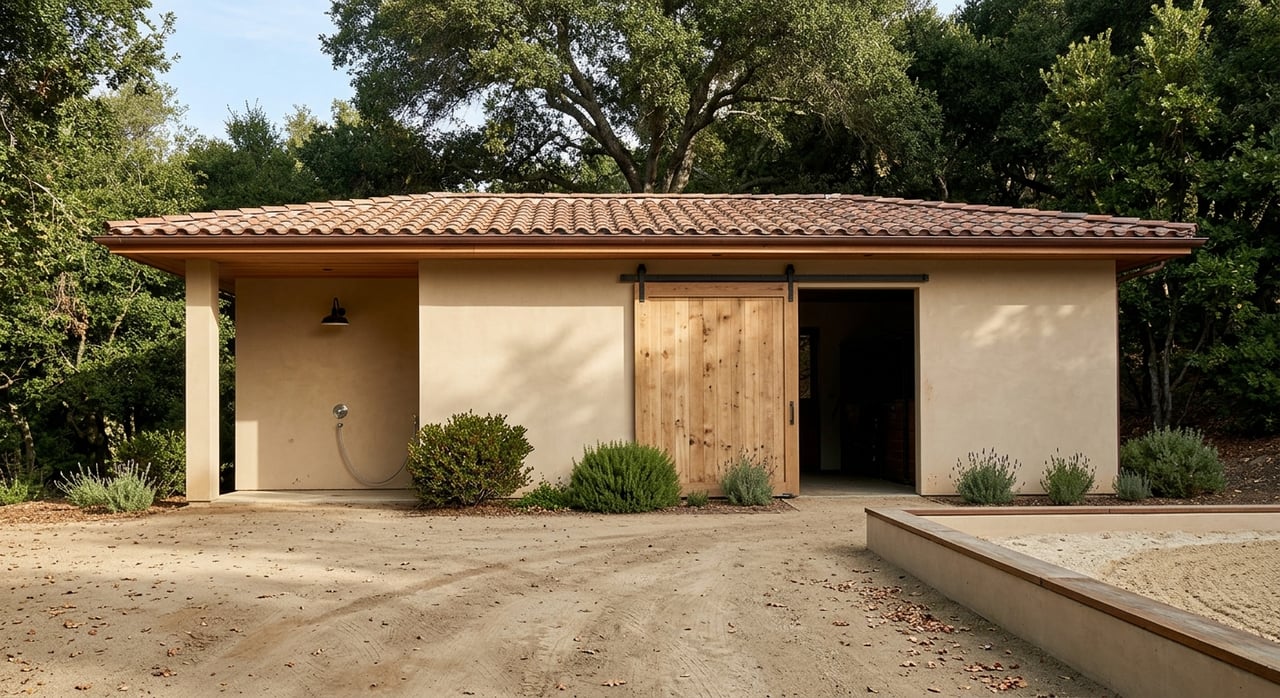
Buyer Basics for Woodside Equestrian Estate Properties
April 16, 2026
April 16, 2026
If you are shopping for a Woodside horse property or estate, it helps to know that not every beautiful parcel functions the same way. In Woodside, zoning, trail access, permit rules, water and septic capacity, and the quality of existing equestrian improvements all shape how a property can actually be used. If you want a home that supports your lifestyle from day one, this guide will help you focus on the details that matter most. Let’s dive in.
Woodside is not just a place with large homes and open land. The town openly describes itself as a horse-oriented community, and its public trail system is an important part of that identity. According to the Town of Woodside’s horse-keeping guidance, the community has long emphasized equestrian use and trail preservation.
That matters when you buy. In many markets, a “horse property” label may simply mean a large lot with a barn. In Woodside, horse use is tied to formal town rules, maintained trails, and site-specific infrastructure that affect whether a property works well for riding, training, or day-to-day care.
One of the first things to understand is lot size. Woodside residential zoning ranges from 20,000-square-foot lots in R-1 Residential up to 1 acre in SR Suburban Residential, 3 acres in RR Rural Residential, and 5, 7.5, and 10 acres in the SCP Special Conservation Planning districts, according to the Town’s housing appendix.
This zoning pattern is a big reason Woodside estate properties feel rural and private. It also affects what may be feasible on the land. Larger acreage can create more flexibility, but usable land still depends on site conditions such as slope, access, and utility constraints.
You should also know that utilities vary by location. The same town appendix notes that most properties in R-1 and SR can access sanitary sewer, while septic drainfield feasibility can be a limiting factor in RR, SCP, and unsewered portions of R-1 and SR. Water is available throughout town through water districts and mutual water companies.
If you plan to keep horses on the property, permit review is essential. Woodside requires a private stable permit, and the town’s private stable permit materials state that you need at least one acre and may keep a maximum of two horses per acre.
The permit rules also cover practical standards for equestrian use. They address shelter size, turnout area, fence height, slope, fire protection, waste management, and the requirement for an onsite residence. In other words, horse use is treated as a regulated land use, not just a personal preference.
The annual cost is relatively modest, but it is still part of ownership planning. Woodside’s current fee schedule lists a $7 annual private stable permit fee and a $50 annual trail maintenance fee per horse, capped at $1,250 per stable.
If your goals go beyond private use, the review path changes. Buyers considering a boarding operation or riding school should know that the town uses a professional stable permit and conditional use permit process, with added review for acreage, stalls, pasture, manure disposal, access roads, and supervision details through its professional stable application materials.
For many buyers, trail access is one of the biggest reasons to consider Woodside. The town’s Trails Committee exists to protect, preserve, and enhance the public equestrian and pedestrian trail system, and the town maintains maps showing different types of trail routes.
That makes a practical difference in how you experience the property. Some buyers want the ability to ride directly from home, while others are comfortable trailering out. If direct access matters to you, it should be part of your search criteria from the start, not a bonus feature you evaluate later.
Woodside’s horse guide describes a combined public and private trail network that connects to county parks and regional open space. It also notes that some riding opportunities are private and membership-based, including references to the Woodside Trails Club and the Horse Park at Woodside.
The same guide points out that surrounding conditions can affect the riding experience. Neighboring dogs, slick asphalt driveways, narrow roadways, and trail-adjacent hazards may all influence day-to-day usability. That is why driveway design, fencing, and lot orientation deserve as much attention as the barn itself.
Not every equestrian improvement adds value in the same way. The best setup depends on how you plan to use the property. If your priority is trail riding, direct trail access may matter more than a large ring. If you want to train or practice more regularly, a riding arena or other purpose-built facilities may become much more important.
Woodside’s stable rules also make it clear that infrastructure matters. The town requires minimum 10-by-10 shelters, 600-square-foot turnouts, less than 20 percent slope for equestrian structures, driveway access, a 3/4-inch hose within 50 feet, fire extinguishers, and a manure or waste plan through its private stable standards.
That means a property can look ideal in photos and still be limited in practice. A barn without strong access, enough turnout space, or compliant fire and utility features may require added work before it supports your intended use.
In Woodside, estate value often comes from the full combination of land, infrastructure, and flexibility. The town’s housing appendix notes that many lots outside R-1 may have potential for at least one accessory living quarters, although topography and sewer or septic conditions may limit what is realistic.
Woodside’s ADU guidance adds another important layer. It explains that ADUs may be attached, detached, above a garage, in a basement, or converted from an existing accessory structure such as a detached garage or barn, subject to site-specific constraints.
For estate buyers, that can expand the long-term value conversation. Guest quarters, caretaker housing, or multigenerational living may be possible depending on the parcel and improvements already in place. It is one more reason to evaluate the property as a system, not just a main house with outbuildings.
The purchase price is only part of the picture. Ongoing horse care can add up quickly, especially if you plan to keep animals onsite and maintain facilities. Utah State University Extension notes in its equine buyer guidance that owners should expect at least $1,000 to $2,000 per horse per year for feed, health care, equipment, farrier, and veterinary services, before boarding, with added costs for fencing, trailers, hay or grain handling, and insurance.
Woodside buyers should also factor in wildfire readiness. The town’s defensible space and home hardening matching program defines defensible space as at least 30 feet from the property perimeter and reimburses 50 percent of qualifying work up to $3,000.
For some properties, utility review may also be part of your due diligence. San Mateo County notes that parcels with onsite wastewater treatment systems or individual domestic water wells may require Environmental Health Services review to confirm adequate sewage disposal and potable water supply for a proposed project through its permit guidance.
Before you move forward on a Woodside equestrian or estate property, it helps to review a short list of fundamentals:
Woodside properties can be exceptional, but they are also highly site-specific. Two homes with similar acreage and similar asking prices may offer very different functionality depending on permits, trail connections, topography, and utility capacity.
That is why buyers benefit from a disciplined, property-by-property review. In this market, the most successful purchase is not just the one with the most land or the nicest barn. It is the one that aligns cleanly with how you want to live, ride, and use the property over time.
If you are considering a Woodside equestrian or estate purchase, working with an advisor who can help you evaluate zoning, property function, and long-term value can make the process much clearer. If you would like thoughtful guidance tailored to your goals, connect with Wendy Kandasamy for a personalized consultation.
Stay up to date on the latest real estate trends.
Leveraging her expertise in both the economics of home ownership and sharp analysis of the real estate market. This unique combination proves invaluable when crafting tailored solutions for her clients' diverse real estate needs
Get In Touch With Wendy To Learn More
Address: 578 University Ave Palo Alto CA 94301